Hi, I’m Thomas.

For 36 years, I told stories with pictures. Now, I’m telling them with words.

The kindergarten rival

It all started in kindergarten. I can’t remember her name, but I do remember her laughing at my drawing.

You could say I’m a bit competitive. I kept practising, even after we moved away and I forgot what she looked like. Eventually, I realized I loved drawing.

I first went to Malaspina College (now VIU) planning to become an art teacher. When I saw I’d have to take several semesters of psychology, I changed my mind. I loved art and wanted to be an artist (just not a starving one), so I switched to graphic design.

Over the past thirty-six years, I’ve designed for National Geographic Live, IMAX, the Royal BC Museum, the Royal Victoria Marathon and the world’s most famous hacker, Kevin Mitnick. I’ve also worked with countless clients whose names you might not know, but you’ve probably seen. My designs are on aircraft, vehicle wraps, storefronts, magazines, books, comic strips, animated videos and hundreds of thousands of marathon shirts.

When it comes to websites, I worked in an ad agency’s art department in the 90s, reading an HTML manual (as one does for fun). My boss came by with a client, a bank president, who said the bank needed a website. I looked up and said, “I can do that.” My first website was for a bank, and I’ve never stopped learning things that way.
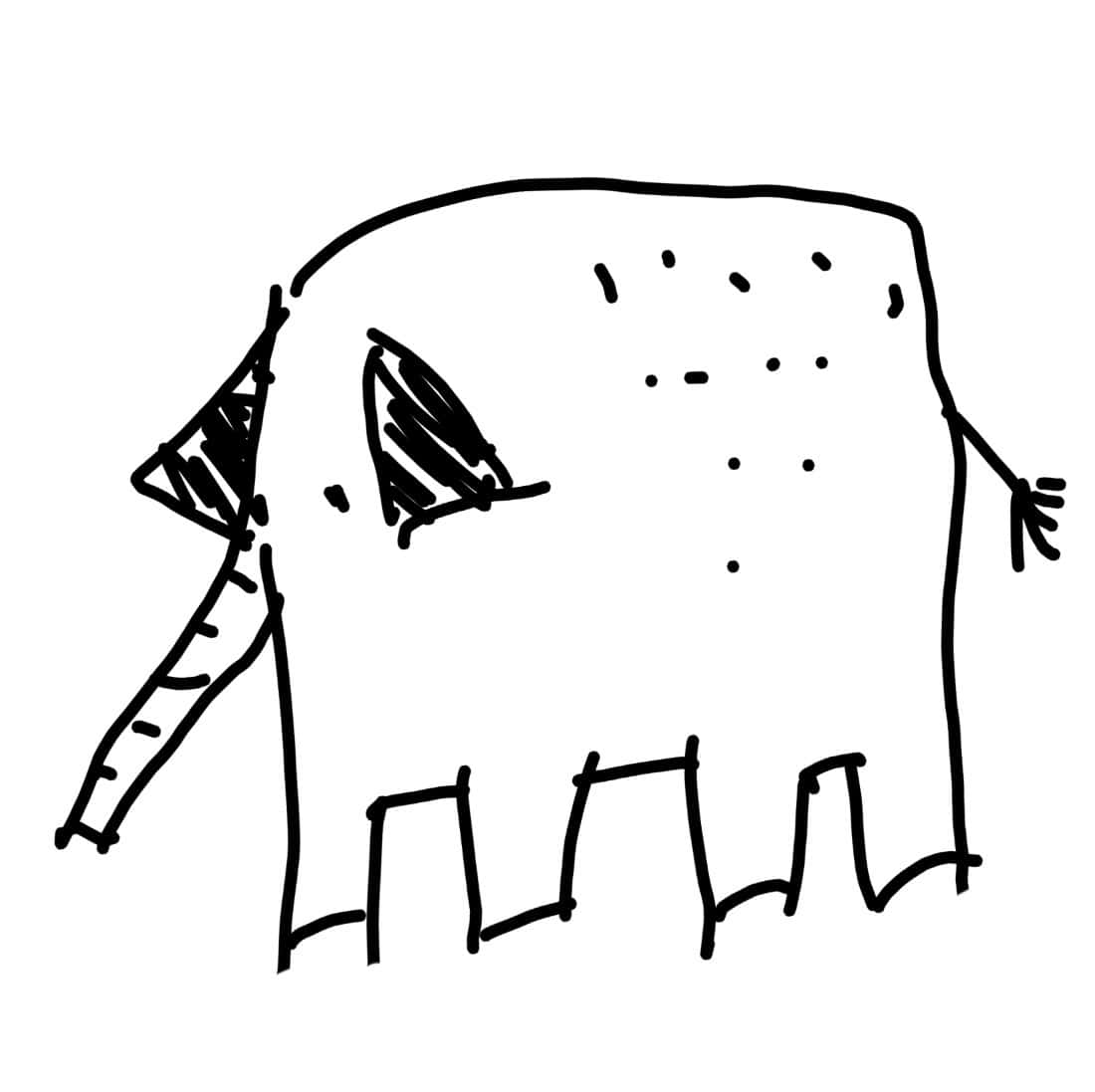
kindergarten → now. scroll to watch.

The road home

I was born in Victoria, British Columbia, but I wasn’t there for long.

I grew up all over the United States, moving so often that being the new kid became normal. At sixteen, I came home, leaving large US cities, during the hip-hop and hair-metal years, and arriving in Port Alberni, a small mill town of about twenty thousand people on Vancouver Island. It was a culture shock, but it’s where I was reunited with my mom, my family, and my culture. I’m nuučaan̓uɫ (Nuu-chah-nulth) from the Tla-o-qui-aht First Nation.

After that, I moved down the island, first for college, then finally back home. Victoria has always felt right to me. This is where I belong.

Now I live and work here, on Lək̓ʷəŋən territory. My kids have grown up with the same friends all their lives, something I never had, and I’m grateful they did.

How Things Work and How Loud They Can Get

I’ve loved science fiction since grade three, when I found Andre Norton on a library shelf.

From there, I moved on to the classics: Jules Verne, Isaac Asimov, Arthur C. Clarke, Larry Niven, and Ray Bradbury.

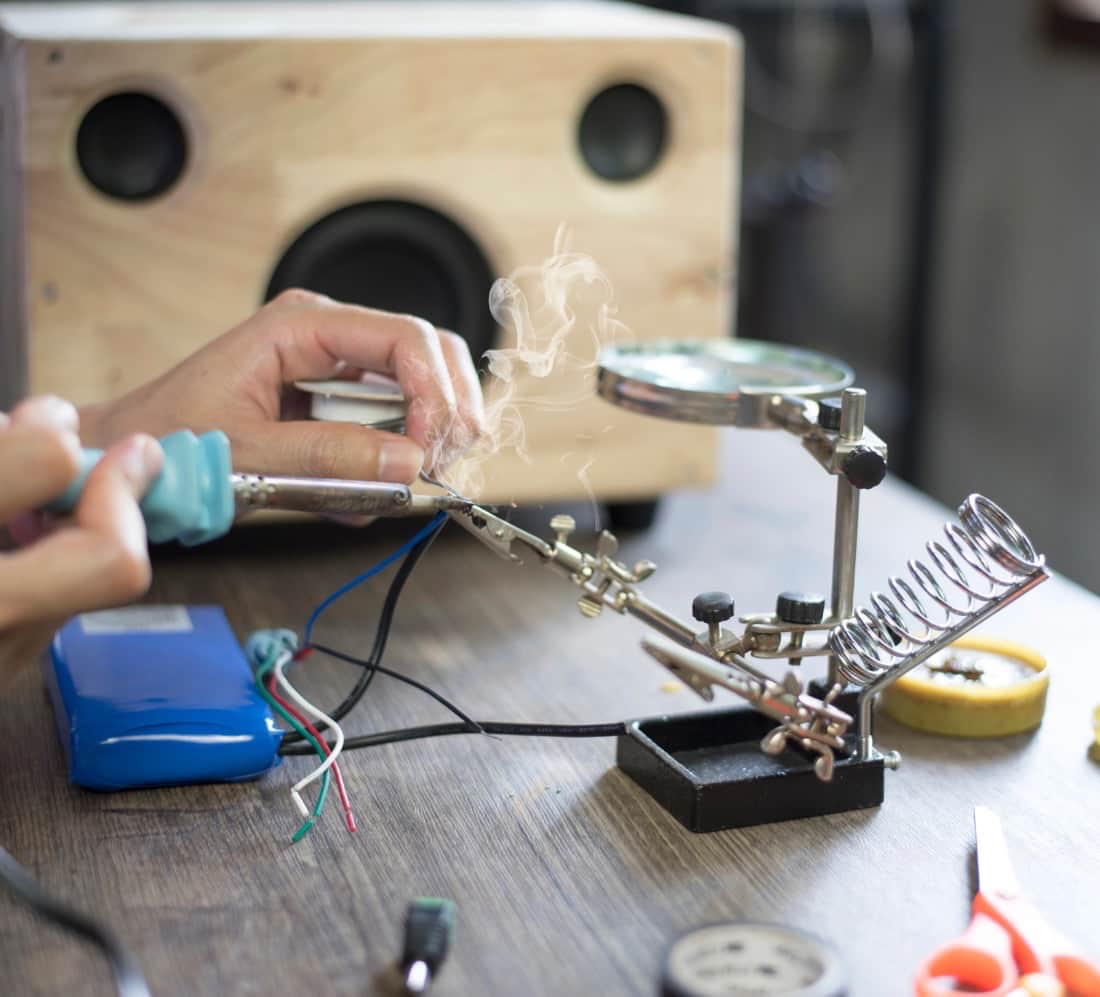
I was the kind of kid who took things apart just to see how they worked. Once, I took apart an old portable 8-track player and turned it into a guitar amp. Since both a guitar pickup and an 8-track’s playback head use magnets and vibration, I tinkered and soldered until it worked. The only way to get distortion was to turn it up all the way. It got really loud (Sorry mom).

I still approach science the same way: take it apart, figure out how it works, and see how loud you can make it.

Hands soldering wires at a workbench, with a magnifier and helping hands clamp, smoke curling up in front of a homemade wooden speaker

I’ll die on this hill: I remember the horn

My first book, Continuity Error, began with a podcast. I enjoy listening to mystery shows on long walks or runs, the kind about strange signals and unexplained things. I don’t always believe the stories, but they’re fun to listen to. One night, they discussed the Mandela effect, and I thought: that would make a great story if someone took it further.

I’ll admit it: I remember the horn of plenty on the Fruit of the Loom logo. I’d swear it was there. As one of my characters says, I will die on this hill defending that.

I get a few of the other details wrong too, like Mickey Mouse’s suspenders, Curious George’s tail, or how to spell the Flintstones. I’m a terrible speller, so thank you, Grammarly, and thank you, editor. Memory is flexible. We group things together, and when we remember one, others sometimes tag along. That’s the science. My first book explores what happens if that’s not the whole story.

Written for the ear

I write late at night, often after everyone else has gone to bed, with a Bubly or a decaf coffee. I love the taste of coffee, but I also like not being addicted to it.

When I finish a chapter, I listen to it as an audiobook while I walk. I walk along the ocean on my favourite five-kilometre route. As I go, I dictate notes into my phone, sentence by sentence, for every trip or misstep. If I’m running, I just listen.

The voice in the clip isn’t mine. I’m good with visuals, and I hope I’m good with stories, but trust me, you don’t want to hear me um and ah my way through twelve hours of manuscript.

If a sentence doesn’t sound right spoken, it isn’t finished.

The claim was for underwear. It wasn’t expensive underwear. It wasn’t the kind a movie star wore or kept under glass in a museum. It was forty-one pairs of 1970s Fruit of the Loom briefs, still in their original packages. They were lost when a basement in Esquimalt flooded. The claimant valued them at $1,000. Whenever I see a number like that, I wonder why.

From Continuity Error, chapter 1 · read by ElevenLabs

NOVELS, PLURAL1412 pp.
Continuity Error2 of 8
The Next Lead1 of 8
The Relayoutlining
3:32synopsis

Why the short stories won’t stay short

I keep trying to write short stories. Each one turns into the outline for a novel.

I think I know why. As a kid, the excitement of science fiction was visiting other worlds. Now, it’s about going there with someone I care about and watching them change. Character growth takes time and pages, so every short story I start ends up needing more of both.

See the books in progress →

What I want you to feel

I want you to reach the end of one of my books surprised, then flip back and find the clues were there all along.

I love a good twist, the kind that changes how you read everything before it. (Brandon Sanderson is the master; I’m taking notes.) Every reveal in my books is planted early, in plain sight, so on the second read, I hope it feels like a different book.

I also want you to believe in the world I create. Continuity Error takes place in the world right outside my window. The books I’m planning after it will visit places that don’t exist yet, and I want to map them so carefully that you feel like you could walk right in.

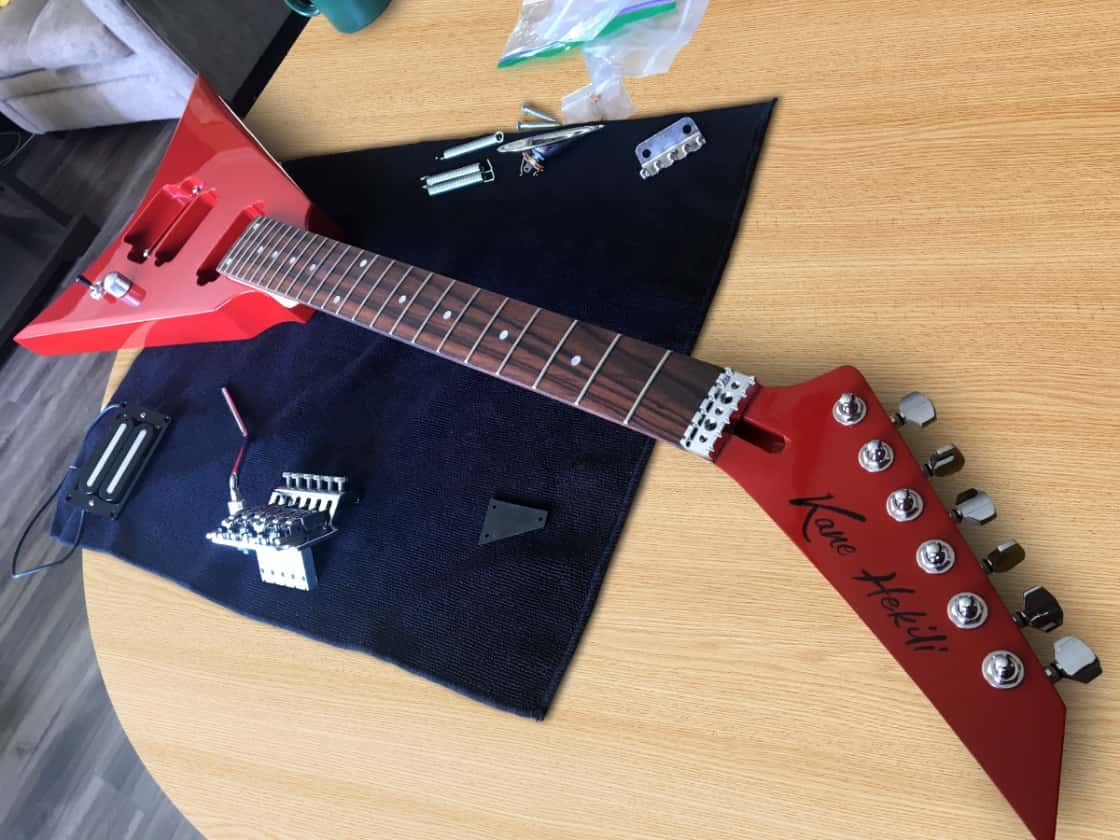
A bright red shark-fin Flying V, mid-build on a table, with “Kāne Hekili” lettered on the headstock and the whammy bridge, pickup and springs laid out beside it
Kāne Hekili, mid-build. He eats strings for breakfast.

When I’m not writing

I make art, painting, carving, illustration, 3D and motion graphics, blending the traditional forms I grew up with and the digital tools I’ve learned over my career. You can find prints, originals, and carvings at TomSpetter.com.

I play guitar, badly enough to be happy and well enough to keep buying more. Eight hang on my wall, and I’m running out of wall. I built one myself during the pandemic: a bright red shark-fin Flying V with chrome hardware and a floating whammy bar that eats strings for breakfast. His name is Kāne Hekili, after the Hawaiian god of thunder. I spent so much time and money on him that I could have bought a nicer one ready-made. I will never build another, but I love him anyway.

The long way to become a writer.

Maybe it all started in kindergarten after all.

Someone laughed at something I made, and I kept practising until I found what I loved to do. Drawing led to design, then to websites and animation, and eventually all that storytelling ended up on the page. I’m still competitive, but now I’m not trying to prove anyone wrong. I just want to write the kind of story that keeps someone up too late, makes them lose track of time, and turn one more page.

Currently reading

  • Mythos by Stephen Fry . research, for a book about gods
  • Heaven’s River by Dennis E. Taylor . just starting
  • The Glass series by Nathan Hystad . just finished

Join the newsletter.

The free Case File for Continuity Error: the first chapter, the characters, and the claim that started it all. Then a short letter about once a month, with progress reports on what I’m working on.